Used Cooking Oil
What Happens to Used Cooking Oil After Pickup? From Fryer to Renewable Fuel
October 25, 2026 · 5 min read
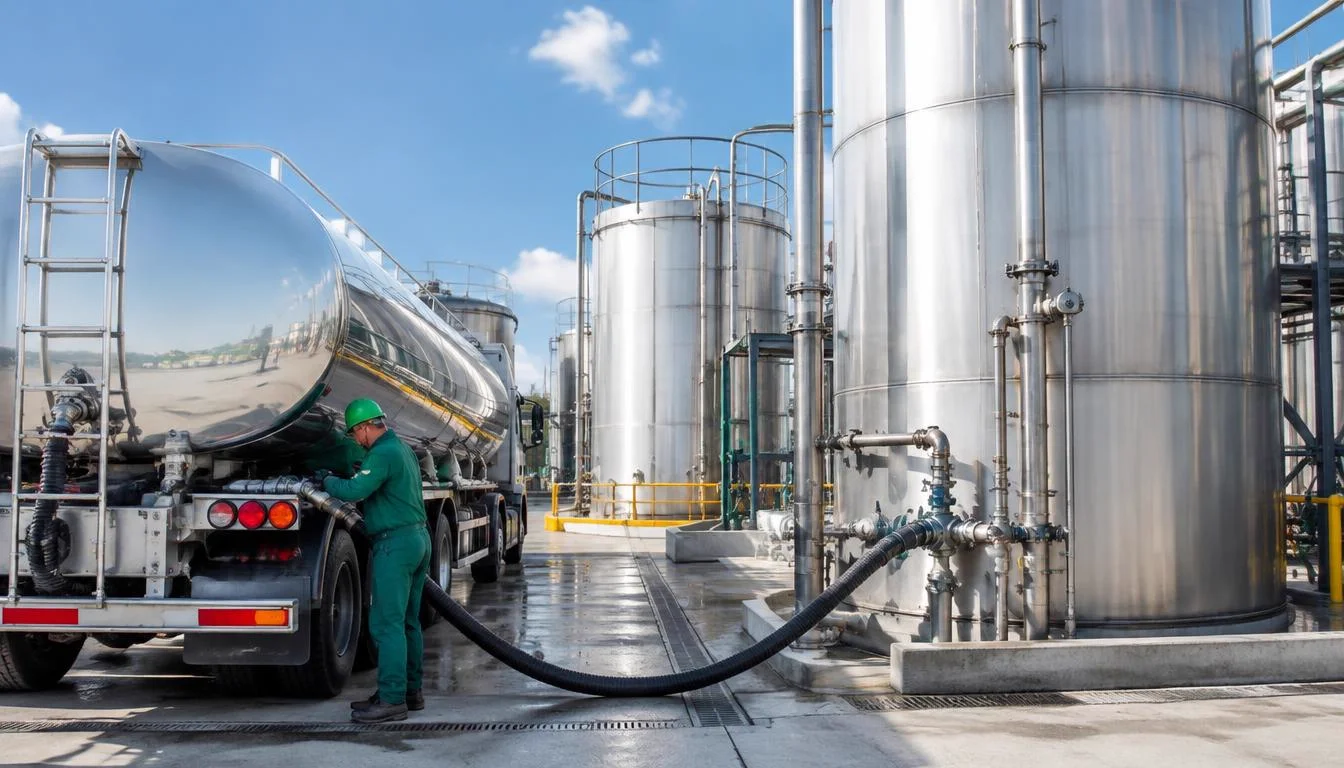
You drain the fryer, pour the oil into your container, and on pickup day it's gone. But where does it actually go? Used cooking oil doesn't end up in a landfill. When it's collected properly, it becomes a valuable raw material for renewable fuels and other products.
Here's a general look at how used cooking oil recycling works, from your kitchen to the finished product.
Step 1: Collection at Your Kitchen
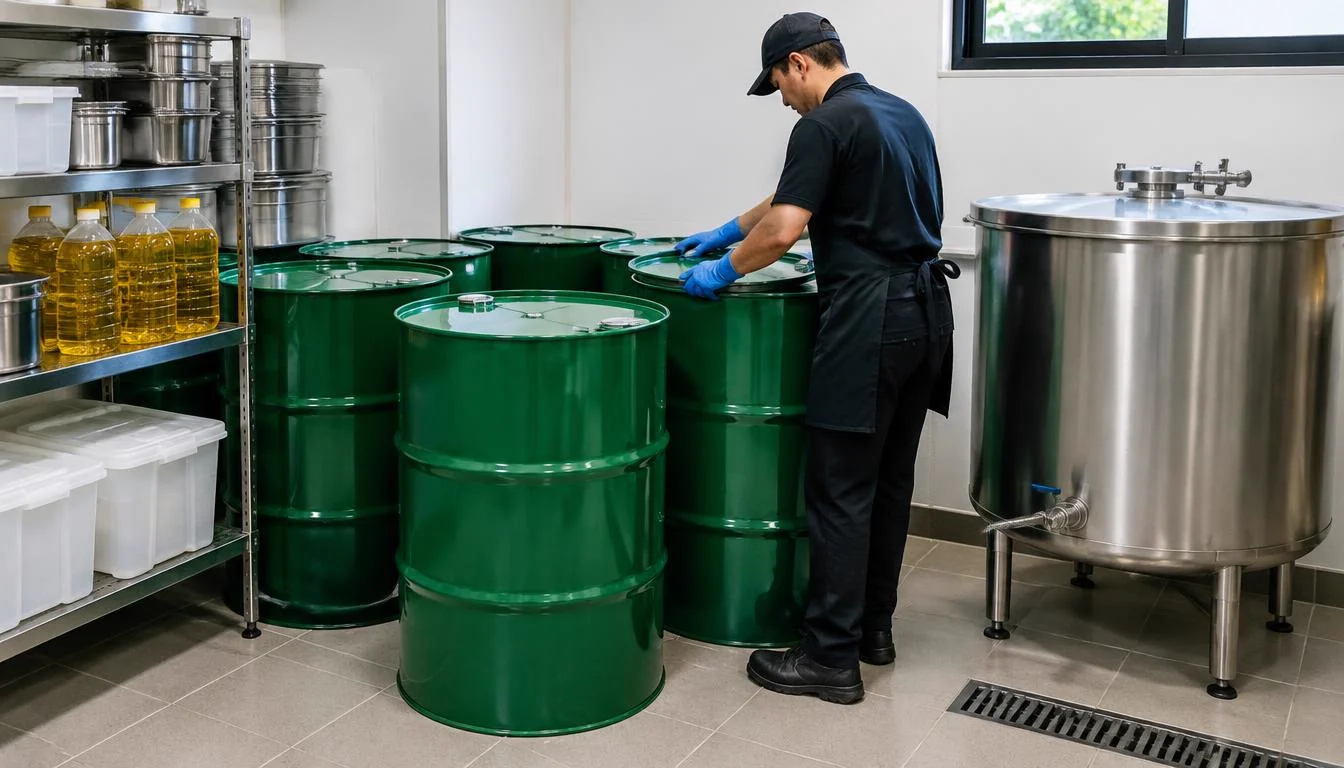
It starts with a dedicated container. Cooking Oil Recyclers provides free locking containers sized for your kitchen, from 55-gallon drums for food trucks to high-volume outdoor containers and indoor tanks. On your scheduled day, weekly or bi-weekly depending on your volume, our team pumps out the container and records what was collected.
The cleaner and drier your oil, the more useful it is for recycling. Keeping lids closed (so rainwater stays out) and keeping trash and food debris out of the container makes a real difference. See How to Store Used Cooking Oil Safely.
Step 2: Transport and Consolidation
Collected oil is transported for consolidation. In its overview of FOG management, the U.S. EPA describes this kind of "yellow grease" as material that food service establishments accumulate for pickup by consolidation service companies for reuse in products such as fuels, tallow, and animal feed supplements.
Step 3: Cleaning and Processing
Used cooking oil straight from a fryer contains water, food particles, and other impurities. Before it can become a usable feedstock, it typically goes through processes such as:
- Settling and heating to separate water and solids from the oil
- Filtering to remove remaining particles
- Quality testing to measure things like water content and impurities
The result is a cleaner oil that can be used as a feedstock for manufacturing.
Step 4: Turning It Into Renewable Fuel
The best-known destination for used cooking oil is renewable fuel. The U.S. Department of Energy's Alternative Fuels Data Center (AFDC) explains two main pathways:
Biodiesel
Biodiesel is produced from vegetable oils, yellow grease, used cooking oils, or animal fats through a process called transesterification. The oil reacts with an alcohol (usually methanol) in the presence of a catalyst, producing biodiesel and glycerin as a coproduct. Glycerin is used in the manufacture of products such as pharmaceuticals and cosmetics. Biodiesel meets the ASTM D6751 specification and is approved for blending with petroleum diesel.
Renewable Diesel
Renewable diesel is a different fuel made from fats and oils, most often through hydrotreating, in which the feedstock reacts with hydrogen at high temperature and pressure with a catalyst. According to the AFDC, renewable diesel is chemically the same as petroleum diesel, meets the ASTM D975 diesel specification, and is primarily made from used cooking oil and inedible animal fats.
Important: raw used cooking oil is not a fuel on its own. The AFDC notes that unprocessed oils and greases should not be used directly as vehicle fuel. That's why proper collection and processing matter.
Step 5: Other Uses
Besides fuel, the EPA notes that collected yellow grease can be reused in products such as tallow and animal feed supplements. Where any given batch goes depends on its quality and on market demand.
Why Recycling Used Cooking Oil Matters
For the environment:
- Keeps fats, oils, and grease out of drains and sewer lines. The EPA identifies grease as a common cause of sewer blockages and overflows.
- Keeps oil out of landfills.
- Gives a waste product a second life as renewable fuel and other products.
For your business:
- You get paid. We pay rebates for your used cooking oil, including cash (We Pay Cash), services like grease trap or container area cleaning, or products for your restaurant. How restaurants get paid for used cooking oil
- Cleaner back of house. A locked container and scheduled pickups mean no overflowing buckets.
- Easier compliance. Recycling fryer oil keeps it out of your drains and grease trap, which helps with local FOG rules.
- Documentation. We provide a manifest for each collection.
Why Locking Containers Matter
Because used cooking oil has value, it's sometimes stolen. A locking container and a reliable collector protect the oil you're owed rebates on. Learn more in How to Prevent Used Cooking Oil Theft at Your Restaurant.
Start Recycling Your Used Cooking Oil
Cooking Oil Recyclers serves restaurants, food trucks, hotels, caterers, commercial kitchens, and residential customers across Florida (including Orlando, Tampa, Jacksonville, Pensacola, Daytona Beach, and West Palm Beach), plus areas of Georgia, Alabama, Mississippi, and South Carolina. See our service areas.
Call (407) 329-6626 (7 AM – 8 PM) or request a free pickup online. It takes under 2 minutes.
FAQ
Is used cooking oil really recycled? Yes. Collected used cooking oil is a common feedstock for biodiesel and renewable diesel, and it can also be used in other products.
What's the difference between biodiesel and renewable diesel? Both can be made from used cooking oil, but they're made through different processes. Biodiesel is made through transesterification. Renewable diesel is made most often through hydrotreating and is chemically the same as petroleum diesel.
Can I use my fryer oil directly in a diesel engine? No. The U.S. Department of Energy notes that unprocessed oils and greases are not biodiesel and should not be used as vehicle fuel.
Do you pay for used cooking oil? Yes. We pay rebates, including cash, services, or products.
Do I get a record of what was collected? Yes. We provide a manifest for each collection.
Sources
Related
More Articles
Used Cooking Oil
Fryer Oil Tips: How to Extend Oil Life in Your Commercial Kitchen
Practical fryer oil tips for restaurants: filtering, temperature control, skimming, covering, and knowing when to change oil — plus what to do with used oil.
October 25, 2026 · 5 min read
Used Cooking Oil
How to Store Used Cooking Oil Safely at Your Restaurant
Safe used cooking oil storage for restaurants and food trucks: cooling, transferring, container placement, preventing spills and theft, and scheduling pickups.
October 25, 2026 · 5 min read