
Grease Traps
7 Signs Your Grease Trap Needs Cleaning (Before It Shuts Down Your Kitchen)
October 25, 2026 · 5 min read
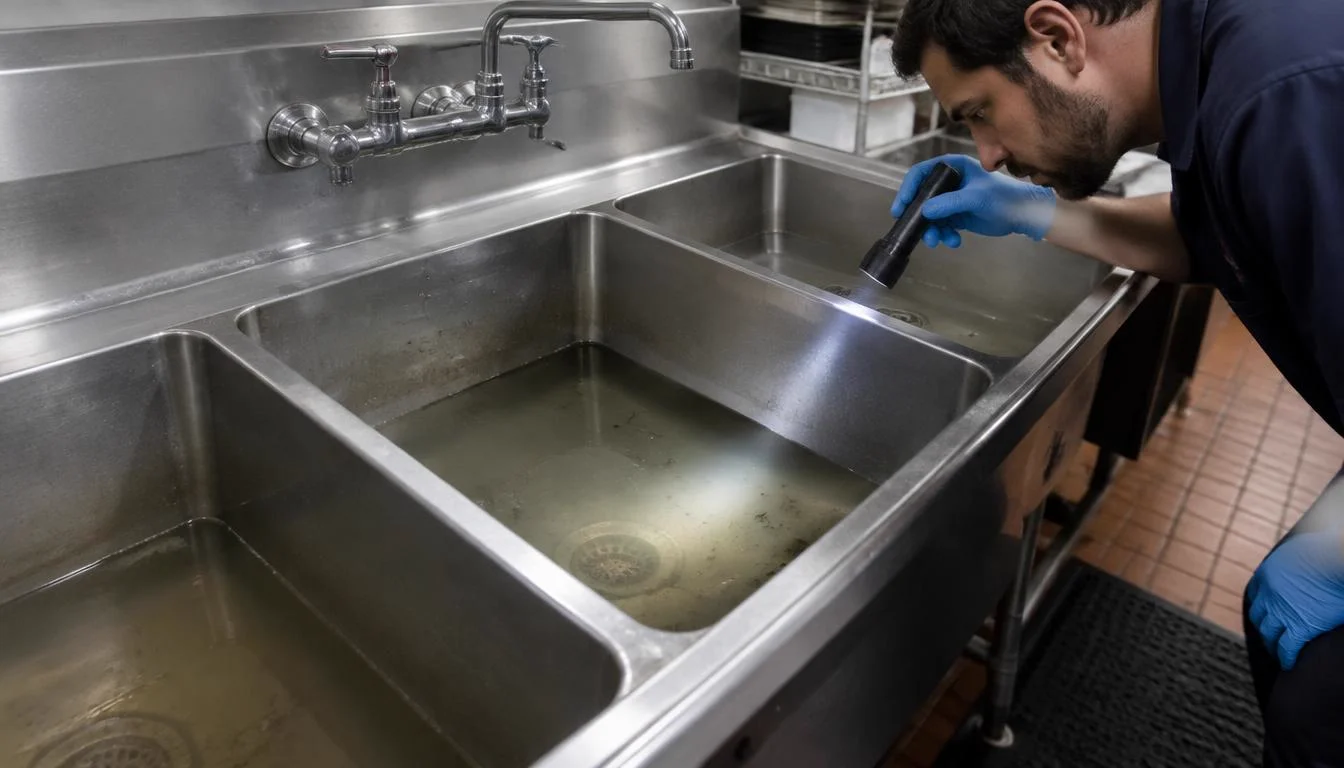
Your grease trap works quietly in the background until it doesn't. When it fills up, grease and food solids start slipping past it into your plumbing and the city sewer. That can mean clogs, odors, emergency plumbing calls, failed inspections, and even a kitchen that has to stop service during a rush.
The good news: a full grease trap almost always gives warning signs first. Here are seven to watch for, plus a simple way to check your trap and what to do next.
Want to know how often to schedule cleanings? Read How Often Should a Grease Trap Be Cleaned?
1. Sinks and Floor Drains Are Draining Slowly
Slow drains are the most common early sign. When grease and solids fill the trap, wastewater has less room to pass through, so sinks in the dish area and prep stations empty slower than usual. If your staff is waiting on sinks to drain, or plunging them more often, check the trap.
2. Bad Odors Around Drains or the Trap
Grease and trapped food break down over time and give off strong, unpleasant smells. If you notice a sour or rotten odor near sinks, floor drains, or the outdoor interceptor lid, and especially if it reaches your dining room, the trap is likely overdue.
3. Water or Grease Backing Up
Water backing up into sinks or floor drains, or grease showing up where it shouldn't, means the trap has gone past capacity. This is the stage where problems get expensive fast. Don't wait: schedule a cleaning right away.
4. Grease Visible Downstream of the Trap
If you or your plumber see grease in drain lines or the sewer cleanout downstream of the trap, grease is passing through instead of being captured. Besides the plumbing risk, this is exactly what local FOG (fats, oils, and grease) programs try to prevent, and it can lead to compliance issues.
5. The Trap Is at or Past the "25% Rule"
Many utilities and plumbing professionals use the 25% rule: clean the trap before grease and settled solids take up about 25% of its capacity. Past that point, it captures grease less effectively. Some utilities, like the Emerald Coast Utilities Authority in the Pensacola area, recommend a monthly "stick test" to measure levels. Check whether your local utility has a similar recommendation.
6. It's Been Too Long Since the Last Cleaning
If you can't remember the last cleaning, or you can't find the manifest, it's time. In Florida, grease trap cleanings by a licensed hauler are documented on a service manifest, and your local program may ask to see your records. A recurring schedule (for example monthly, or every 60 or 90 days depending on your volume) takes the guesswork out.
7. Your Menu or Volume Has Changed
Did you add fried items, extend your hours, or get busier? More meals means more dishes and more grease going down the drain. A trap that was fine on a 90-day schedule may need cleaning more often now.
How to Do a Quick Check
You don't need to be a plumber to keep an eye on your trap:
- Look at your records. When was the last cleaning? Is a manifest on file?
- Watch the drains. Note any slow sinks or recurring clogs.
- Use your nose. Persistent odors near drains or the trap lid are a red flag.
- Measure if you can. If your utility recommends a stick test, follow its instructions.
- When in doubt, call a pro. A professional cleaning includes measuring grease and solids levels before service.
Safety note: outdoor grease interceptors are confined spaces and can be hazardous. Leave opening and pumping large interceptors to trained professionals.
How to Keep Your Trap From Filling Up So Fast
- Scrape and dry-wipe dishes into the trash before washing.
- Never pour fryer oil down any drain. Collect it in a dedicated used cooking oil container instead.
- Use sink strainers and limit garbage disposal use.
- Train staff and post "no grease down the drain" signs.
- Pair grease trap service with used cooking oil collection so fryer oil never ends up in the trap.
What's Included in a Professional Grease Trap Cleaning
With Cooking Oil Recyclers, grease trap cleaning includes:
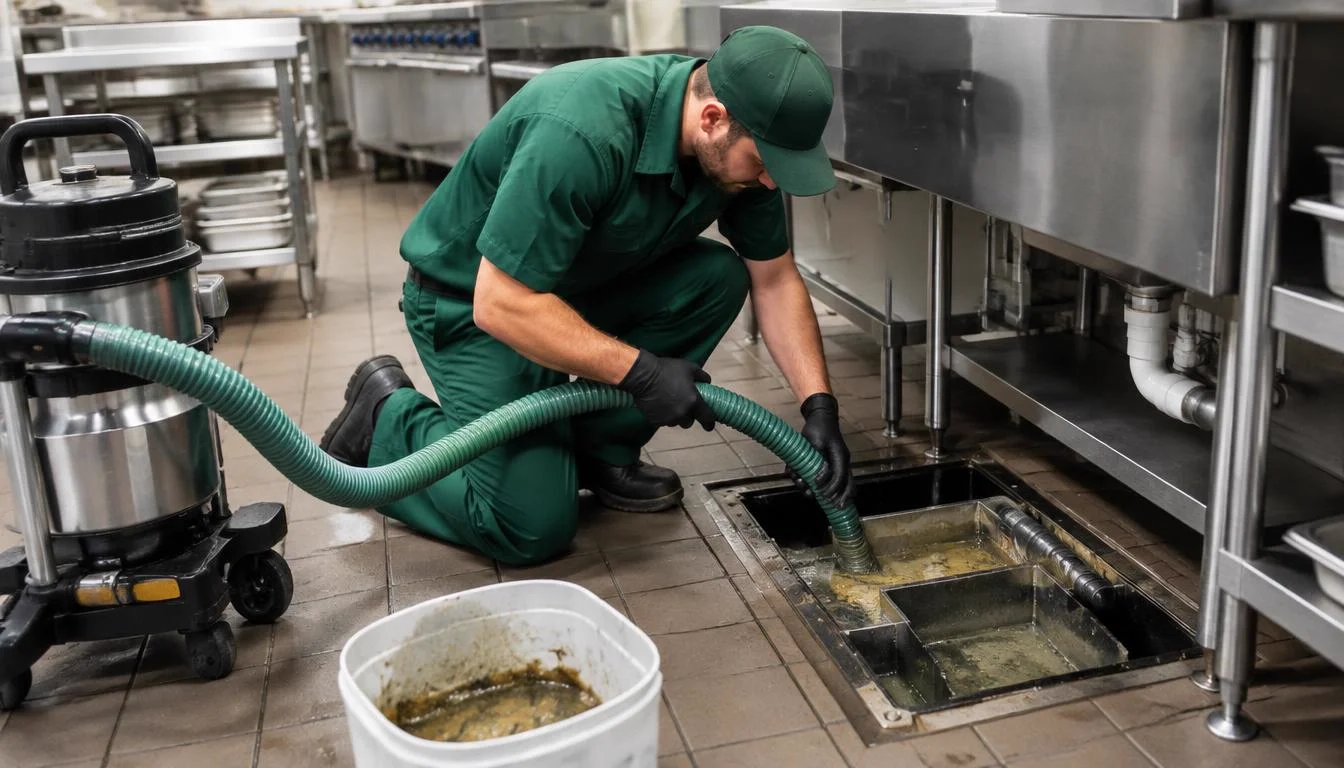
- A full pump-out of fats, oils, grease (FOG) and solids
- Scraping of walls, baffles, and lids
- Inspection of inlet/outlet pipes, baffles, and tees, with a written note of any damage found
- Measurement of grease and solids levels before service
- Proper transport and disposal at a licensed facility
- A service record/manifest after every cleaning
- A recurring schedule based on your kitchen's volume
- Cleanup of the trap area before we leave
Grease trap cleaning is quoted based on your location, how often you need service, and the size of your trap.
We serve kitchens across Florida (including Orlando, Jacksonville, Pensacola, Daytona Beach, and West Palm Beach), plus areas of Georgia, Alabama, Mississippi, and South Carolina. See our service areas.
Seeing any of these signs? Call (407) 329-6626 (7 AM – 8 PM) or request grease trap cleaning online.
FAQ
What does a full grease trap smell like? Usually sour or rotten, from grease and food solids breaking down. Odors near drains or the trap lid are a common sign it needs cleaning.
Can a full grease trap cause a backup? Yes. Once it's past capacity, wastewater and grease can back up into sinks and floor drains.
How often should a grease trap be cleaned? It depends on trap size, volume, and menu. Many kitchens need it every one to three months, and local utilities may set their own minimums. See our frequency guide.
Do I get documentation after a cleaning? Yes. We provide a service record/manifest after every cleaning.
Can I combine grease trap cleaning with used cooking oil pickup? Yes. One provider can handle your oil, your grease trap, and the container area.
Sources
Related
More Articles
Grease Traps
How Often Should a Grease Trap Be Cleaned?
A neglected grease trap leads to clogs, odors, and kitchen shutdowns. Learn how often commercial grease traps typically need cleaning and the signs yours is overdue.
October 20, 2026 · 3 min read